
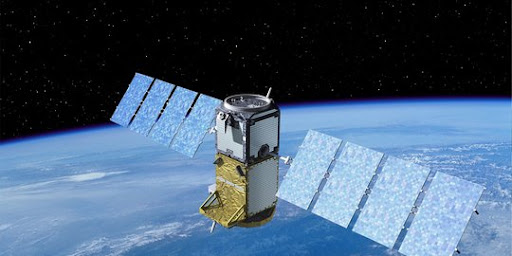
A groundbreaking project is set to transform the way we stay connected at sea. Starting in 2025, a constellation of advanced satellites will provide high-speed internet with speeds of up to 1 Gbps, even in the middle of the ocean.
This ambitious initiative promises to deliver seamless connectivity using a compact glass antenna, roughly the size of a plate, making it an ideal solution for maritime applications.
The introduction of this LEO satellite internet technology is poised to revolutionize the maritime industry, enabling faster and more reliable communication.
Key Takeaways
- Launch of a new LEO satellite constellation in 2025.
- 1 Gbps internet speeds available at sea.
- Compact glass antenna for easy installation.
- Enhanced maritime connectivity for improved communication.
- Significant advancements in satellite internet technology.
The Next Generation of Satellite Internet
LEO satellites are poised to transform the way we access the internet, making it faster and more reliable. The growing demand for global connectivity has highlighted the limitations of current satellite internet technologies. As we move towards a more interconnected world, the need for a robust and efficient satellite internet system has become increasingly evident.
The Global Connectivity Challenge
The world is facing a significant challenge in providing global connectivity, with many regions lacking access to reliable and fast internet. LEO satellites are being touted as a solution to this problem, offering the potential to connect even the most remote areas to the global network. The challenge lies in overcoming the technical and logistical hurdles associated with deploying and maintaining a satellite internet constellation.
Current satellite internet services often suffer from high latency and limited bandwidth, making it difficult to support demanding applications. The global connectivity challenge requires a multifaceted approach, involving technological innovation, infrastructure development, and strategic planning.
How LEO Satellites Are Changing the Game
LEO satellites are changing the game by offering a number of significant advantages over traditional satellite internet systems. Their lower orbit reduces latency, making them ideal for real-time applications. Additionally, LEO satellites can provide faster data transfer rates and more reliable connections, enhancing the overall user experience.
The deployment of LEO satellite constellations is revolutionizing the satellite internet landscape, enabling faster and more reliable internet access worldwide. As the technology continues to evolve, we can expect to see even more innovative applications and services emerge.
What Is Satelit Pintar LEO 6.000 Unit?
The Satelit Pintar LEO 6.000 Unit represents a groundbreaking advancement in satellite technology, designed to revolutionize global internet connectivity. This constellation of smart satellites is engineered to provide high-speed internet access to even the most remote areas of the world.
The Technology Behind Smart Satellites
The Satelit Pintar LEO 6.000 Unit leverages cutting-edge technology to achieve its objectives. “These satellites are not just mere transponders; they are intelligent nodes that can adjust their transmission power, frequency, and beam allocation dynamically based on demand,” says an industry expert. The satellites are equipped with advanced phased array antennas and sophisticated onboard processing capabilities, enabling them to optimize network performance in real-time.
Why 6,000 Units Create a Revolutionary Network
A constellation of 6,000 satellites may seem excessive, but it is this scale that allows for truly global coverage and redundancy. With such a large number of satellites, the network can ensure that users have continuous access to high-speed internet, even in areas with challenging terrain or during periods of high demand. As Mark Smith, a satellite technology analyst, notes,
“The sheer number of satellites in the Satelit Pintar LEO 6.000 Unit constellation means that users can expect seamless connectivity, with the ability to switch between multiple satellites as needed.”
Low Earth Orbit: The Key to High-Speed Satellite Internet
The advent of Low Earth Orbit (LEO) satellites is revolutionizing the satellite internet landscape. By orbiting closer to Earth, LEO satellites offer several advantages over traditional satellite internet solutions.
One of the primary benefits of LEO satellites is their positioning relative to traditional satellites. To understand this, let’s examine the differences between traditional satellite positioning and LEO satellite positioning.
Traditional vs. LEO Satellite Positioning
Traditional satellites are placed in Geostationary Orbit (GEO), approximately 36,000 kilometers above the Earth’s equator. This distance results in significant latency due to the longer signal travel time. In contrast, LEO satellites orbit at altitudes ranging from 160 to 2,000 kilometers, drastically reducing the distance between the satellite and the user.
This proximity to Earth not only reduces latency but also enables faster data transmission rates. The lower orbit allows for more satellites to be deployed, creating a more comprehensive network.
Reduced Latency and Improved Performance
The reduced distance between LEO satellites and the Earth’s surface directly translates to reduced latency. Lower latency means that data can be transmitted more quickly, resulting in a more responsive internet experience. This improvement is crucial for applications requiring real-time communication, such as video conferencing and online gaming.
Furthermore, the improved performance of LEO satellites enables high-speed satellite internet that can compete with traditional broadband services. This makes LEO an attractive solution for areas where conventional internet infrastructure is lacking or unreliable.
In conclusion, the deployment of LEO satellites is a significant step towards achieving global high-speed satellite internet coverage. By understanding the advantages of LEO over traditional satellite positioning, we can appreciate the potential of this technology to transform the way we access the internet.
The Breakthrough of 1 Gbps Internet Speeds
Achieving 1 Gbps internet speeds is a significant milestone, offering unparalleled connectivity at sea. This breakthrough is set to revolutionize various aspects of maritime operations, from enhanced streaming capabilities to improved business applications.
What 1 Gbps Means for End Users
The implications of 1 Gbps internet speeds are vast for end-users. It enables seamless streaming, rapid file downloads, and robust business applications, even in the middle of the ocean.
Streaming and Download Capabilities
With 1 Gbps internet, users can enjoy high-definition streaming without buffering and download large files in a matter of seconds. This capability is a significant upgrade from the slow and often interrupted connections currently available.
Business Applications at Sea
For businesses operating at sea, 1 Gbps internet means enhanced productivity and the ability to conduct operations in real-time. This includes video conferencing, cloud computing, and other data-intensive tasks.
Comparing to Current Maritime Internet Options
Current maritime internet options often suffer from slow speeds and high latency. In contrast, 1 Gbps internet provided by the Satelit Pintar LEO constellation offers a significant upgrade in terms of speed and reliability. This comparison highlights the advancements made in satellite internet technology.
The table below summarizes the key differences:
| Feature | Current Maritime Internet | Satelit Pintar LEO 1 Gbps |
|---|---|---|
| Speed | Typically up to 100 Mbps | Up to 1 Gbps |
| Latency | High | Significantly Reduced |
| Reliability | Often Interrupted | Highly Reliable |
Revolutionary Glass Antenna Technology
A significant breakthrough in satellite internet is the development of plate-sized glass antennas for the Satelit Pintar LEO 6.000 Unit. This innovative technology is poised to transform the way we access high-speed internet, especially in maritime and remote areas.
How Plate-Sized Glass Antennas Work
The plate-sized glass antennas are designed to provide a sleek and efficient way to receive and transmit data. These antennas are made possible by advancements in material science and signal reception technology.
Material Science Breakthroughs
The development of these glass antennas relies on advanced materials that can efficiently transmit and receive signals. The use of special glass compositions allows for optimal signal clarity and strength.
Signal Reception Technology
The signal reception technology integrated into these glass antennas ensures high-quality connectivity. This technology is capable of handling complex signal processing, providing a stable and fast internet connection.
Installation and Maintenance Simplicity
One of the key benefits of the plate-sized glass antennas is their simplicity in installation and maintenance. The design is user-friendly, allowing for easy setup and minimal upkeep. Here are some key advantages:
- Easy to install without requiring specialized labor
- Minimal maintenance due to durable construction
- Compact design that doesn’t obstruct other equipment
Weather Resistance and Durability
The glass antennas are designed to be weather-resistant and durable, capable of withstanding harsh environmental conditions. This makes them ideal for use in various settings, from maritime vessels to remote land-based installations.
The revolutionary glass antenna technology is a significant step forward in satellite internet connectivity. With its advanced materials, efficient signal reception, and durable design, it promises to deliver high-speed internet access to a wide range of users.
Implementation Timeline Starting 2025
The Satelit Pintar LEO 6,000 Unit project is poised to revolutionize global internet connectivity starting from 2025. This ambitious initiative promises to bring high-speed internet to even the most remote areas, leveraging a constellation of Low Earth Orbit (LEO) satellites.
Current Development Status
As of now, the Satelit Pintar LEO 6,000 Unit project is in its advanced development stage. Key technologies are being tested, and the satellite manufacturing process is underway. The development team is working closely with industry experts to ensure that the satellites are equipped with the latest innovations in satellite internet technology.
Deployment Phases and Coverage Expansion
The deployment of the Satelit Pintar LEO 6,000 Unit will be carried out in multiple phases. Initially, the focus will be on covering major regions, with subsequent phases expanding to more remote and underserved areas. The phased approach ensures a smooth rollout and allows for adjustments based on initial feedback.
- Phase 1: Initial deployment covering major regions (2025-2026)
- Phase 2: Expansion to secondary regions (2026-2027)
- Phase 3: Final expansion to remote and underserved areas (2027-2028)
When Different Regions Will Gain Access
The timeline for different regions to gain access to the Satelit Pintar LEO 6,000 Unit’s services will depend on the deployment phase. Major regions are expected to be covered first, with initial services launching in 2025. Remote and underserved areas will follow in subsequent phases, ensuring that global coverage is achieved by 2028.
Real-World Applications of Satelit Pintar LEO 6.000 Unit
By deploying 6,000 LEO satellites, Satelit Pintar is on the cusp of a connectivity revolution that will touch various aspects of our lives. The Satelit Pintar LEO 6,000 Unit is designed to provide high-speed internet access globally, and its applications extend far beyond just enhancing personal connectivity.
Maritime Industry Revolution
The maritime industry is on the verge of a significant transformation thanks to the Satelit Pintar LEO 6,000 Unit. With the ability to provide 1 Gbps internet speeds even in the middle of the ocean, shipping companies can now enjoy uninterrupted connectivity. This enables better navigation, real-time cargo tracking, and enhanced communication between vessels and shore-based teams.
Remote Area Connectivity Solutions
One of the most significant advantages of the Satelit Pintar LEO 6,000 Unit is its ability to provide remote area connectivity. Communities in remote and underserved areas will have access to high-speed internet, bridging the digital divide and opening up new opportunities for education, commerce, and social interaction.
Emergency and Disaster Response Capabilities
In times of emergency and disaster, the Satelit Pintar LEO 6,000 Unit can play a critical role. With its ability to provide rapid and reliable connectivity, it can support rescue operations, enable communication between response teams, and facilitate the delivery of critical aid to affected areas.
The diverse applications of the Satelit Pintar LEO 6,000 Unit underscore its potential to make a significant impact on various sectors. As it begins its deployment in 2025, the world can look forward to a new era of global connectivity.
Technical Specifications and Network Architecture
Satelit Pintar LEO 6.000 Unit is a marvel of modern engineering, designed to provide high-speed internet access even in the most remote areas. The technical specifications and network architecture of this satellite system are crucial in understanding its capabilities and potential impact.
Satellite Design and Components
The Satelit Pintar LEO 6.000 Unit is engineered with advanced components, including high-gain antennas and state-of-the-art transponders. These components work together to ensure reliable and fast internet connectivity. The satellite’s design also incorporates robust materials to withstand the harsh conditions of space.
| Component | Description | Specification |
|---|---|---|
| High-Gain Antennas | Designed for optimal signal reception and transmission | Frequency: Ka-band |
| Transponders | Enable data transmission between the satellite and ground stations | Bandwidth: 500 MHz |
| Power System | Provides energy through solar panels and batteries | Power Output: 5 kW |
Orbital Parameters and Constellation Pattern
The Satelit Pintar LEO 6.000 Unit operates in a Low Earth Orbit (LEO), approximately 500 km above the Earth’s surface. This orbit allows for reduced latency and improved signal strength. The constellation pattern is designed to ensure global coverage, with satellites distributed across multiple orbital planes.
“The LEO constellation pattern is a game-changer in satellite internet technology, offering unprecedented coverage and connectivity.”
— Expert in Satellite Communications
Power Requirements and Environmental Considerations
The power requirements for the Satelit Pintar LEO 6.000 Unit are met through a combination of solar panels and advanced battery technology. The system is designed to be environmentally friendly, with minimal impact on the space environment. Measures are in place to prevent the satellite from becoming a source of space debris.
- Solar panels for primary power generation
- Batteries for energy storage during eclipses
- Power management system for efficient energy use
By understanding the technical specifications and network architecture of Satelit Pintar LEO 6.000 Unit, we can appreciate the complexity and innovation that goes into creating such a revolutionary satellite system.
Challenges and Limitations to Consider
The implementation of Satelit Pintar LEO 6,000 Unit poses significant regulatory, environmental, and operational challenges. As this satellite network begins to take shape, it’s crucial to address these limitations to ensure its success.
Regulatory Hurdles Across Different Countries
One of the primary challenges is navigating the complex regulatory landscape across different countries. Each nation has its own set of rules and regulations regarding satellite deployments, which can hinder the global rollout of Satelit Pintar LEO 6,000 Unit. For instance, some countries may have strict regulations on the use of certain frequency bands, while others may have specific requirements for satellite disposal at the end of their life cycle.
| Country | Regulatory Requirement | Impact on Satelit Pintar LEO 6,000 Unit |
|---|---|---|
| United States | FCC Approval for Frequency Use | Requires coordination with the FCC to ensure compliance |
| European Union | Compliance with EU’s Radio Spectrum Policy | Must adhere to EU’s spectrum allocation guidelines |
| China | Approval from China’s Ministry of Industry and Information Technology | Needs to comply with China’s specific regulations on satellite operations |
Space Debris Concerns
Another significant concern is the potential for space debris. With 6,000 satellites in orbit, there’s a risk of collisions and the generation of debris that could threaten other satellites and spacecraft. To mitigate this, Satelit Pintar LEO 6,000 Unit must implement robust collision avoidance maneuvers and adhere to guidelines for responsible satellite operation and disposal.
Potential Service Interruptions and Solutions
Service interruptions can occur due to various factors, including solar flares, satellite malfunctions, or atmospheric conditions. To minimize these interruptions, the Satelit Pintar LEO 6,000 Unit network will employ redundancy in its design, with backup satellites and ground stations ready to take over in case of failures. Additionally, advanced weather forecasting and monitoring systems will help predict and mitigate the effects of adverse conditions.
Conclusion: The Future of Global Internet Connectivity
The Satelit Pintar LEO 6.000 Unit project is set to transform the landscape of global internet connectivity. By launching 6,000 low Earth orbit satellites, it aims to provide 1 Gbps internet speeds, even in the most remote and maritime areas, using a revolutionary glass antenna technology.
This ambitious project is expected to start deployment in 2025, with various regions gaining access at different phases. The implications are vast, from revolutionizing the maritime industry to providing connectivity solutions for remote areas and enhancing emergency response capabilities.
As the world becomes increasingly interconnected, the Future of Internet is likely to be shaped by such innovative technologies. The Satelit Pintar LEO 6.000 Unit is a significant step towards achieving global internet connectivity, bridging the digital divide, and opening up new possibilities for communities worldwide.
FAQ
What is Satelit Pintar LEO 6.000 Unit?
Satelit Pintar LEO 6.000 Unit is a satellite internet project launching in 2025, designed to provide 1 Gbps internet speeds globally, including at sea, using a glass antenna the size of a plate.
How does the glass antenna technology work?
The glass antenna technology is a breakthrough in material science and signal reception. It is designed to be compact, durable, and weather-resistant, making it ideal for maritime and remote applications.
What are the benefits of Low Earth Orbit (LEO) for satellite internet?
LEO reduces latency and improves overall performance compared to traditional satellite positioning, making it ideal for high-speed internet applications.
What are the real-world applications of Satelit Pintar LEO 6.000 Unit?
The project has various applications, including revolutionizing the maritime industry, providing connectivity solutions for remote areas, and enhancing emergency and disaster response capabilities.
When can different regions expect to gain access to Satelit Pintar LEO 6.000 Unit?
The implementation timeline starting from 2025 includes deployment phases and coverage expansion. Different regions will gain access as the constellation is deployed and coverage is expanded.
What are the challenges associated with Satelit Pintar LEO 6.000 Unit?
Challenges include regulatory hurdles across different countries, concerns about space debris, and potential service interruptions, along with proposed solutions to address these issues.
How does Satelit Pintar LEO 6.000 Unit compare to current maritime internet options?
Satelit Pintar LEO 6.000 Unit offers significantly faster internet speeds and more reliable connectivity compared to current maritime internet options.
What is the current development status of Satelit Pintar LEO 6.000 Unit?
The project is currently under development, with a planned launch in 2025 and ongoing deployment phases.
How will Satelit Pintar LEO 6.000 Unit impact the future of global internet connectivity?
Satelit Pintar LEO 6.000 Unit is poised to revolutionize global internet connectivity by providing fast, reliable, and widespread internet access, bridging the connectivity gap worldwide.
- situs toto
- DINARTOGEL
- WAYANTOGEL
- DISINITOTO
- SUZUYATOGEL
- PINJAM100
- SUZUYATOGEL DAFTAR
- DEWETOTO
- GEDETOGEL
- slot gacor
- Paito hk lotto
- HondaGG
- PINJAM100
- DINARTOGEL
- DINARTOGEL
- PINJAM100
- PINJAM100
- PINJAM100
- PINJAM100
- PINJAM100
- HondaGG
- DWITOGEL
- bandar togel online
- situs bandar toto
- daftarpinjam100
- loginpinjam100
- linkpinjam100
- slotpinjam100
- pinjam100home
- pinjam100slot
- pinjam100alternatif
- pinjam100daftar
- pinjam100login
- pinjam100link
- MAELTOTO
- DINARTOGEL
- DINARTOGEL
- slot gacor
- DINARTOGEL
- DINARTOGEL
- DINARTOGEL
- DINARTOGEL
- DINARTOGEL
- DINARTOGEL
- TOTO171
- TOTO171
- TOTO171
- TOTO171
- TOTO171
- TOTO171
- TOTO171
- gedetogel
- TOTO171
- slot gacor
- bandar togel toto online
- link slot gacor
- situs slot gacor
- rtp slot gacor
- slot77
- PINJAM100
- PINJAM100
- gedetogel
- gedetogel
- gedetogel
- gedetogel
- gedetogel
- toto online
- bandotgg
- bandotgg
- bandotgg
- bandotgg
- bandotgg
- bandotgg
- bandotgg
- bandotgg
- bandotgg
- bandotgg
- bandotgg
- bandotgg
- bandotgg
- bandotgg
- slot pulsa
- slot
- rtp slot
- bandar togel online
- bandotgg
- gedetogel
- gedetogel
- hondagg
- slot
- slot77
- bandotgg
- bosgg
- togel online
- bandar toto online
- toto online
- slot gacor
- toto gacor
- slot online
- togel toto
- slot gacor toto
- slot
- slot
- dwitogel
- togel
- apintoto
- bandotgg
- Kpkgg slot
- nikitogel
- Slot gacor
- SLOT777
- slot gacor
- Slot gacor
- slot
- bandotgg
- dinartogel
- DINARTOGEL
- DISINITOTO
- bandotgg
- slot qris
- slot gacor
- rtp slot
- slot gacor
- slot toto
- slot88
- gedetogel
- slot4d
- slot777
- slot gacor
- bandotgg
- nikitogel
- nikitogel
- TOTO171
- WAYANTOGEL
- superligatoto
- superligatoto
- bandotgg
- slot toto
- slot toto
- ciputratoto
- dwitogel
- disinitoto
- dinartogel
- wayantogel
- toto171
- bandotgg
- depo 5k
- angka keramat
- prediksi togel
- prediksi sdy
- prediksi sgp
- prediksi hk
- togel4d
- bandotgg
- bandotgg
- ciputratoto
- ciputratoto
- slot gacor
- dewetoto
- dewetoto
- RUPIAHGG
- bandotgg
- dinartogel
- superligatoto
- ciputratoto
- slot77
- slot77
- depo 10k
- slot pulsa
- doragg
- DORAGG
- doragg
- slot gacor 2026
- doragg
➡️ Baca Juga: Aktivis Digital Ajak Komunitas Desa Hadapi Ancaman Hoaks
➡️ Baca Juga: Kecaman Meluas: Oknum Guru Ejek Remaja Tuna Wicara – Berita Terkini